Data science has rapidly transformed from a technical discipline into a critical driver of modern business strategy. As organizations generate massive amounts of data each day, the real advantage lies in the ability to interpret this information and convert it into meaningful direction. Businesses that leverage data science effectively can anticipate trends, optimize operations, elevate customer engagement, and gain an edge in competitive markets. By understanding how data shapes decision-making, companies can build strategies that are both intelligent and adaptable. Advance your career and gain in-demand skills by enrolling in a comprehensive Data Science Course in Chennai, designed to equip you with practical knowledge in analytics, machine learning, and AI.
The Strategic Value of Data-Driven Insights
Data-driven insights empower organizations to move away from assumptions and act based on evidence. When businesses understand patterns hidden within their data, they can make choices that are timely and aligned with their long-term goals. This shift toward data-centric thinking helps leaders reduce risk, uncover hidden opportunities, and create solutions tailored to real-world conditions rather than guesswork.
How Predictive Models Strengthen Decision-Making
Predictive analytics places future possibilities at the forefront of business planning. With the help of algorithms and machine learning models, companies can anticipate customer actions, market shifts, supply-chain demands, or revenue fluctuations. This foresight enables decision-makers to plan proactively, develop stronger strategies, and position their organization to respond swiftly to upcoming challenges or opportunities.
Enhancing Customer Experiences Through Data Science
Organizations today compete heavily on customer experience. Data science enables deeper personalization by analyzing preferences, behavior, and journey patterns. Whether it’s customizing product recommendations, improving service delivery, or identifying pain points, data helps businesses design experiences that resonate with their audience. This not only boosts satisfaction but also strengthens long-term loyalty.
Applications of Data Science in Business Growth
- Streamlining daily operations through automation and process optimization
- Analyzing customer interactions to improve products and services
- Supporting strategic planning with accurate forecasting
- Detecting potential risks or anomalies early
- Enhancing marketing performance with targeted insights
Boost your professional credentials with a Data Science Certification Course, offering hands-on training in analytics, machine learning, and AI to help you excel in the data-driven industry.
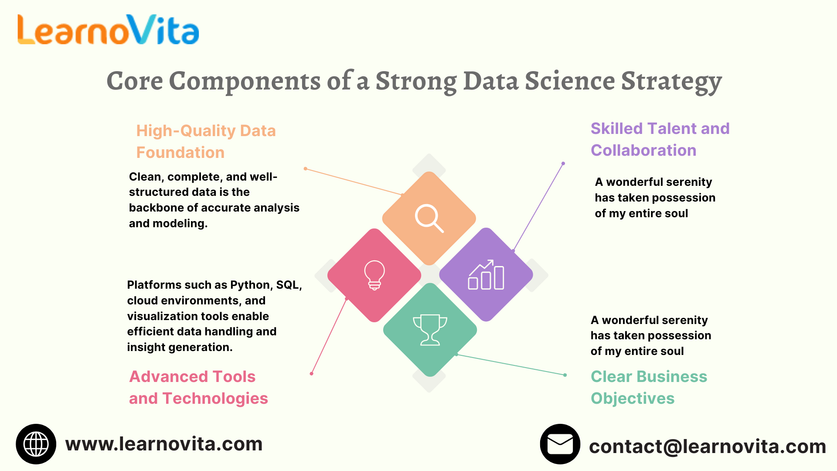
Core Skills for Effective Data Science Adoption
- Understanding statistical concepts and data modeling
- Working with tools like Python, R, or SQL
- Applying machine learning algorithms for predictions
- Communicating insights through data visualization
- Interpreting complex datasets to support strategic goals
The Relationship Between Data Science and Innovation
Data science contributes significantly to innovation by uncovering insights that might otherwise go unnoticed. When companies recognize emerging trends early, they can develop fresh ideas, modernize existing processes, and explore new revenue possibilities. This continuous cycle of discovery and adaptation positions businesses to remain competitive in evolving markets.
Conclusion
Data science has become a foundational element of successful business strategy. By integrating analytics, predictive modeling, and data-driven thinking, organizations can navigate decisions with clarity and confidence. Companies that embrace this approach are better equipped to transform raw information into practical actions, foster innovation, and build smarter long-term strategies that support ongoing growth.